Empathy doesn’t always arrive with tissues or grand gestures.
Sometimes, it just stands beside you in sweatpants, scanning the cereal shelf, and says, “Yeah, I’ve felt that too.”
AI-GENERATED IMAGE — A VISUAL NOD TO A REAL MOMENT OF EMPATHY.
It was a regular Tuesday. The kind of day you go in for almond milk and walk out with five things you didn’t plan on — emotionally included.
I was in aisle five, mentally debating between crunchy or soft granola, when a woman beside me let out a breath that felt… heavy.
She wasn’t talking to me, but the space between us felt charged.
She turned slightly and said, almost to herself,
“Do you ever feel like you’re one minor inconvenience away from a full meltdown?”
I looked up.
She gave a half-laugh — the kind that tries to cover vulnerability with humor. We all do it.
And in that split second, I had a choice: offer a polite nod and keep comparing granola labels… or pause.
I paused.
The Granola Aisle Became Sacred Ground
For the next ten minutes, that aisle turned into a tiny therapy room.
She opened up about her mom’s illness, the burnout of being “the strong one,” and how even small wins feel exhausting when you’re running on fumes.
I didn’t offer solutions. I didn’t say, “have you tried yoga?” or “maybe a gratitude journal?”
I just stood there.
No interruptions. No interjections. Just presence.
And presence, I’ve learned, is deeply underrated.
She Didn’t Need Fixing
She didn’t need a therapist. She just needed a moment.
Someone to hear her without flinching.
A stranger who could say, even without words,
You’re not crazy. You’re not alone.
It felt like a quiet agreement between us:
Two women in a grocery store, holding space for each other in the middle of life’s messiness.
We didn’t exchange names or numbers. There was no movie-style ending.
But as she walked away, she smiled and said,
“Thanks for letting me fall apart near the oats.”
I smiled back,
“Better oats than alone.”
The Power of Quiet Presence
That night, I sat with a cup of chamomile tea — no almond milk, I forgot it entirely — and thought about what had unfolded.
It brought something back to me—something I’ve come to believe over time:
Empathy isn’t about fixing things. It’s not about saying the perfect thing either.
Sometimes, it’s just about being there. Being the soft space where someone else can fall apart, without fear. No answers. Just presence.
The Invitation to Pause
We live in a world that’s quick to talk and slow to hear.
But sometimes, being someone’s accidental therapist — in a grocery store, a waiting room, or even the comment section — can ripple further than we realize.
So the next time you find yourself in aisle five, or anywhere really, and someone’s truth spills out unexpectedly…
Just pause.
You don’t have to fix it.
Your presence alone might be the thing they didn’t know they needed.
I had a vision: a sunrise yoga session, a green smoothie, a long mindful walk, maybe even journaling by the window with soft music in the background. You know—one of those mornings.
But instead?
I snoozed the alarm twice. The blender refused to cooperate. And the long walk? Got swapped for a shorter one around the kitchen while looking for matching socks.
For a moment, I felt that familiar wave of “maybe I should just give up for today.”
But then I caught myself.
I still rolled out the mat—even if just for ten slow stretches. I still made tea. I still breathed with intention, even for a few minutes. That wasn’t nothing.
That was my 80%.
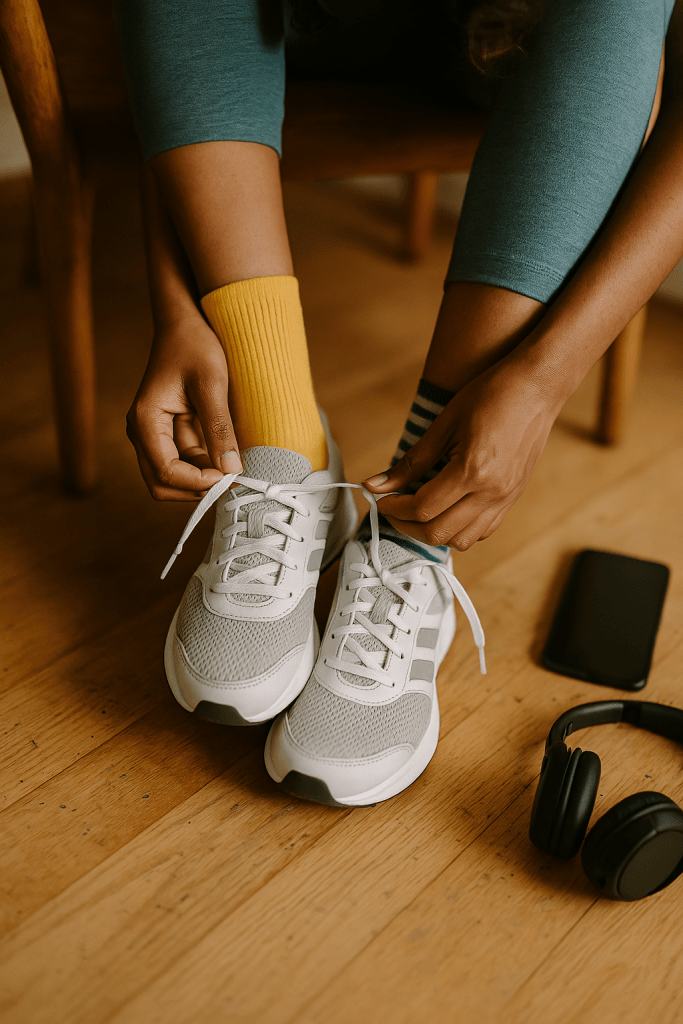
THIS IMAGE IS AI-GENERATED — NO SHOELACES WERE HARMED IN THE MAKING. 😊
Team Consistent
My dad always said, “This world is driven by average people, not exceptional ones.”
There’s no shame in being average.
There’s strength in showing up—consistently, gently, and wholeheartedly.
Because progress isn’t about perfection. It’s about choosing to keep going. I choose consistent.
In our house, my husband and daughter tend to get things just right (they say- perfectly). My son and I? We’re the consistent ones. And honestly… we like our team better.
Perfection sometimes overwhelms. It can quietly irritate, even paralyze.
Sometimes, behind the act of doing things perfectly, I catch a glimpse of something else— a quiet attempt to escape the task altogether. Perfection isn’t always about doing our best. Sometimes, it’s just resistance dressed up in prettier clothes.
But consistency? That feels like a soft exhale. Like choosing to do something instead of nothing.
The Myth of All or Nothing
We’re often tricked into thinking that if we can’t do it all, we shouldn’t do it at all.
If the full routine isn’t perfect, it somehow “doesn’t count.”
But what if it does?
What if the magic lives in the small, steady, imperfect moments?
Like a plant that doesn’t need to be flooded—just watered a little, every day.
Showing Up Messy Is Still Showing Up
Ten minutes of movement. One nourishing meal. A glass of water. A kind thought.
These may not look impressive on a checklist. But they build something real over time.
Consistency isn’t about perfection. It’s about grace. About gently saying, “This is enough for today.”
So if today isn’t perfect…
Let it be kind. Let it be honest. Let it be enough.
Because you showed up. And that’s the real victory.
“Progress isn’t perfect. It’s patient. And it shows up, even in pajamas and mismatched socks.”
So here’s to the quiet champions of the day—the ones who show up without the perfect script, the polished routine, or the matching socks.
Here’s to the 80%.
To choosing presence over pressure.
To grace over grind.
To simply being here, just as you are.
That’s more than enough. That’s beautiful.
This blog is dedicated to my dad—
A quiet force of consistency, who showed up for his yoga and walks nearly every day for over 35 years.
Thank you for showing me that steady steps can lead to something extraordinary.
Some days, a conversation feels heavier than the topic. A message goes unseen, not because we don’t care—but because we do, maybe too much.
This post is a soft reminder about emotional recharging—an ode to that quiet, in-between space where we catch our breath before re-entering someone else’s orbit.
It’s not ghosting—it’s grounding.
And sometimes… it’s also just needing a snack before dealing with feelings.
This moment of pause? It’s not just for people managing long-term conditions or emotional burnout. It’s for anyone who’s ever snapped at a text, regretted a message sent too soon, or just needed a break from being the “fun one” all the time.
It’s for the extroverts who give and give until they’re empty.
For the ones with mood swings who feel too much, too fast.
For people with short fuses and big hearts.
For anyone who’s ever said, “I just need a minute.”
Because here’s the truth: everyone has their “emotionally unavailable” moments. And that’s okay.
We live in a world of fast replies, blue ticks, and typing bubbles that blink like mini emotional heartbeats. But sometimes, the bravest thing you can do… is pause. Or nap. Or both.
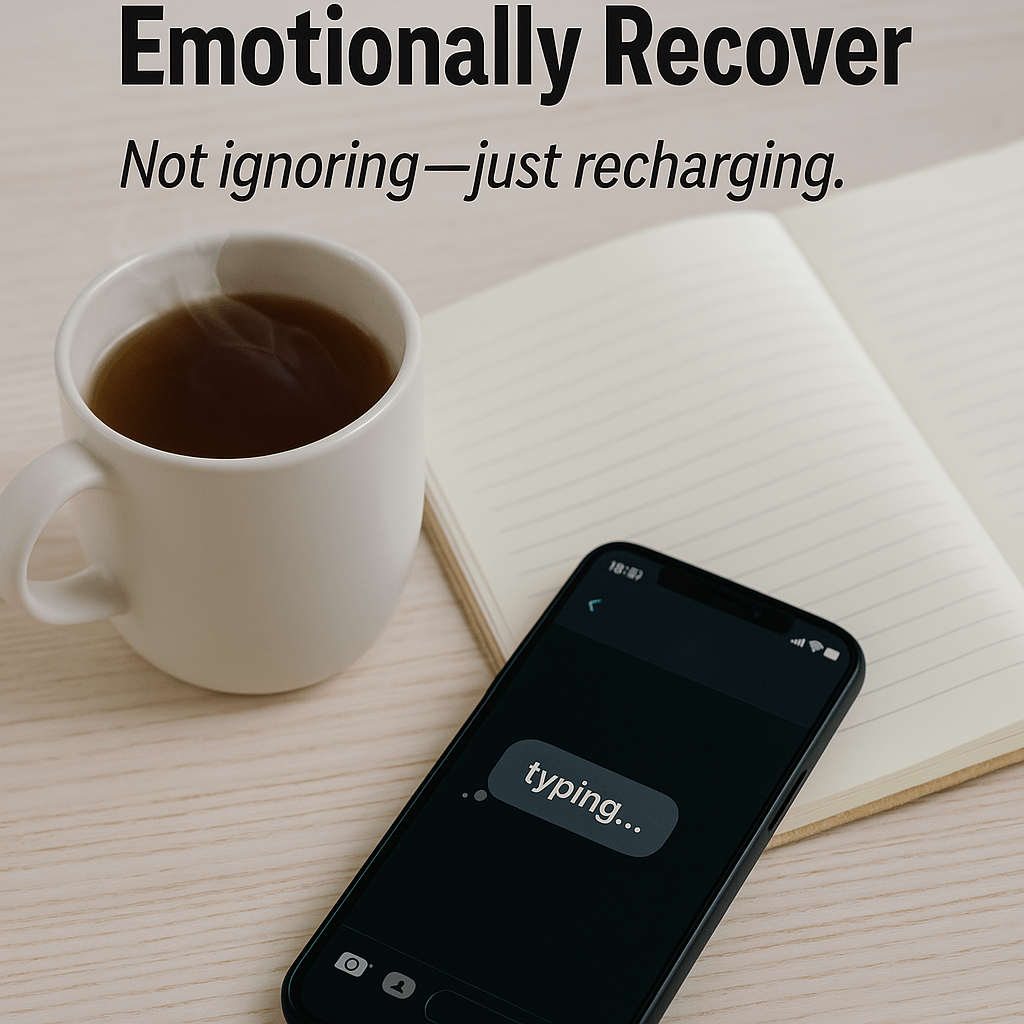
AI-GENERATED MOMENT OF QUIET—JUST A PHONE, TEA, AND A PAUSE. NOT A REAL SCENE, BUT A REAL VIBE
The Typing Bubble Tango
I started replying.
Stopped.
Rewrote.
Deleted.
Typed again—slower this time, like each word was auditioning for its place.
The typing bubble blinked on. Then off. Then on again, like it too couldn’t make up its mind.
This wasn’t a fight. It wasn’t drama. It was just one of those messages that carried weight—not because of what was said, but because of how much we’d both been holding in silence.
I stared at the screen for a full minute.
And then I did the bravest thing I could do at that moment:
I closed the app and made tea.
The kettle boiled. The steam rose. I sat down under a blanket that smelled like lavender and last week’s laundry detergent.
Because here’s what I’ve learned:
Not every response needs to be immediate.
Not every pause is avoidance.
Sometimes, the best thing you can send someone…
is silence, wrapped in respect.
And in that pause, I started thinking—maybe this kind of stillness isn’t silence at all. Maybe it’s how we hold space without crowding it. Or maybe it’s just emotional Wi-Fi buffering, and we’re all doing our best.
Holding Space by Stepping Back
Because caring doesn’t always mean constant.
The Invisible Hug
She told me everything she was going through.
I listened. I nodded. I said all the right things.
And then, quietly, I asked:
“Do you want me to keep checking in… or do you just want to know I’m here when you need me?”
She exhaled like she’d been holding that breath for days.
“Just know I’m not alone,” she whispered.
So I did.
No daily texts. No pressure.
Just space—warm, open, and waiting.
An invisible hug on standby.
“No expiration date. No “read” receipt required.”
Gentle Reflections (with a Wink)
This is about the kind of love that isn’t loud.
The kind of support that shows up quietly, then steps aside—not because it doesn’t care, but because it trusts the other person to breathe, process, and return when ready.
It’s for the friends who check in by not checking in every hour.
For the people who ask, “Want to talk?” but don’t panic when the answer is “Not right now.”
And for the moments when you need to be left alone with your thoughts… and also some carbs.
Because the kindest thing we can offer isn’t always advice, urgency, or presence-on-demand—it’s a little space, and the gentle promise:
“I’ll still be here when you come back.”
💌 Closing Thought
Whether you’re the one sending the message or the one taking a while to reply, this is your reminder: it’s okay to pause. To rest. To not be emotionally available on demand.
We are all learning how to be here for others without losing ourselves.
And sometimes, that means holding space. Stepping back. Brewing tea instead of replying right away.
So take the time. Recharge. Reconnect when you’re ready.
The love? It’s still there.
The message? It can wait.
And the blanket? It’s always warm.
And when your heart feels ready to speak again—text back, return gently, and know you were never forgotten.
I was at this imaginary airport — don’t ask how I got there, I’m just as confused — standing in line with a suitcase that looked like it had been dragged through a decade of overthinking and people-pleasing. The zipper was gasping. I’m honestly surprised it didn’t pop open and hit someone in the face with a memory from that one zoom call where you were definitely not on mute.
The airline agent, a woman named Joy (because of course she was), took one look at it and said,
“Oh honey. You’re about to get charged an emotional baggage fee.”
She wasn’t wrong.
She even read the tag out loud:
“Contents: Old fears, outdated guilt, and the crushing weight of trying to please everyone always.”
Apparently, I’d been hauling it for years. Never even noticed. I’d just gotten good at carrying it. (10/10 posture, zero peace.)
Then Joy told me they’d updated their policy — you could now “leave stuff behind”. There was even a bright blue bin labeled:
“Unhelpful Thoughts & Feelings: Let Go Here.”
I laughed nervously. “Cool, cool. But like… what if I need the ‘What Will People Think’ folder? It’s color-coded and everything.”
Before I could keep talking myself out of it, this older woman rolled by with the calmest energy I’ve ever seen and a tiny backpack labeled “Things I Actually Like.” She gave me a knowing look and said,
“Travel lighter. Feels better.”
So I started unpacking.
Out went the awkward memory from high school.
Tossed the jar of guilt I’d kept since forever.
Even let go of the laminated “What-ifs” flashcards I’d reviewed every night like bedtime stories.
The bag zipped up effortlessly. Light as a marshmallow. (Okay maybe not that light, but you get the idea.)
Joy slapped on a sticker that read “Now Boarding: Peace & Snacks” and waved me through.
And I kid you not — as I walked away, I swear my suitcase whispered, “Finally.”
As I boarded, I noticed I wasn’t the only one.
Someone had tossed out an old to-do list.
Someone else left behind a grudge so big it filed for taxes separately.
I found a window seat, leaned back, and thought:
“Maybe healing doesn’t have to be dramatic. Maybe it’s just getting tired of paying extra for stuff you don’t even want to carry.”
The seatbelt sign came on.
I fastened mine around my joy and carried on — minus the baggage.
THIS VISUAL WAS GENTLY CRAFTED WITH AI TO MIRROR THE STILLNESS AND STRENGTH IN THESE WORDS
A year ago, I found myself standing in the kitchen, staring at a list that felt like a brick wall. Tasks, errands, messages, updates… even rest had become something I needed to schedule. I chuckled at the irony—my to-do list had its own zip code.
That’s when it hit me:
I didn’t need to do more. I needed to do less.
Not in a rebellious, drop-everything-and-move-to-the-mountains kind of way (though tempting), but in a cozy, grounded, soul-honoring way. I decided to try a gentle lifestyle shift—one that prioritized presence over pressure.
Here’s what I discovered—and what you might love too.
The Myth of More
For the longest time, I believed that unless I was running on empty, I wasn’t doing enough. “Busy” became my badge of honor, productivity my measure of worth.
But one rushed morning, already behind schedule and sitting in traffic before 9 a.m., I realized: this is not it.
What if more isn’t always the goal?
What if peace lives in the quiet margins?
Doing less gave me back what I didn’t even know I was missing: the space to actually enjoy my life, not just manage it.
Doing Less ≠ Being Less
Letting go of the hustle doesn’t mean you’ve stopped caring—it means you’re caring better. More intentionally. More gently.
One weekend, I skipped a Zoom gathering I felt obligated to attend. I was tired, and my daughter had just brewed a pot of calming herbal tea. We sat together, chatting about leaves, colors, how matcha always feels like a hug from the inside out, and how regular tea just doesn’t have the zen drama we need. That quiet moment—unplanned and unhurried—became the highlight of my month.
Doing less made room for more of what truly matters.
The Cozy Layer: Curating Your Daily Life
These days, I treat each morning like I’m designing a cozy room—soft light, warm textures, and only what brings me peace.
Instead of overloading my schedule, I now choose just three core tasks a day. That’s it. Anything extra is simply grace.
I’ve also woven in tiny rituals:
A deep breath before writing
A 3-minute stretch while waiting for the kettle
A post-lunch stroll with my phone left behind
These aren’t tasks. They’re cozy layers—comfort woven gently into the structure of my day.
Boundaries as Blankets
For the longest time, saying “no” felt harsh—like a door slamming shut. But now, I see boundaries as soft blankets—protective, warm, necessary.
A dear friend once asked if I could help organize a community event—during a week when I was already running on low. My heart wanted to say yes, but my body quietly said no. And this time, I listened.
I told her, “I’d love to support it from the sidelines, but I can’t commit right now.”
She understood. I stayed home, made soup, wrote in my journal. I felt whole.
Boundaries help us keep giving—but in a way that honors our own energy first.
Mindful Moments That Stretch Time
Time expands when you slow down.
One rainy afternoon, I found myself peeling an orange by the window. The scent, the sound of raindrops, the feel of the peel in my hand—it felt like a sacred pause. Just me and the moment.
Doing less allows these stretchy spaces to appear—little pockets of presence that turn the ordinary into something magical.
Try this:
Eat without distraction
Watch the steam rise from your tea
Sit in silence before your day begins
These tiny shifts will make your day feel longer, softer, and more yours.
Reclaiming Rest as a Sacred Act
Rest isn’t something we earn. It’s something we need.
For years, my version of rest meant scrolling on my phone, feeling guilty about everything I hadn’t done. It wasn’t until I started leaning into true stillness—guilt-free—that I felt the restoration begin.
Sometimes that looks like lying on the floor with a warm compress over my eyes. Other days, it’s stepping outside, greeting the sun for five uninterrupted minutes.
Rest is where the exhale lives.
It’s where our healing quietly waits.
A Cozy Challenge for You
Doing less doesn’t mean disappearing. It means showing up more fully—for yourself.
When I embraced this slower rhythm, I began to hear my own voice again. I became more present with my family, gentler with myself, and clearer about what I truly wanted.
So if you’re feeling overwhelmed, here’s your cozy challenge:
Let go of one thing this week. Just one.
And see what opens up in its place.
Then say this with me:
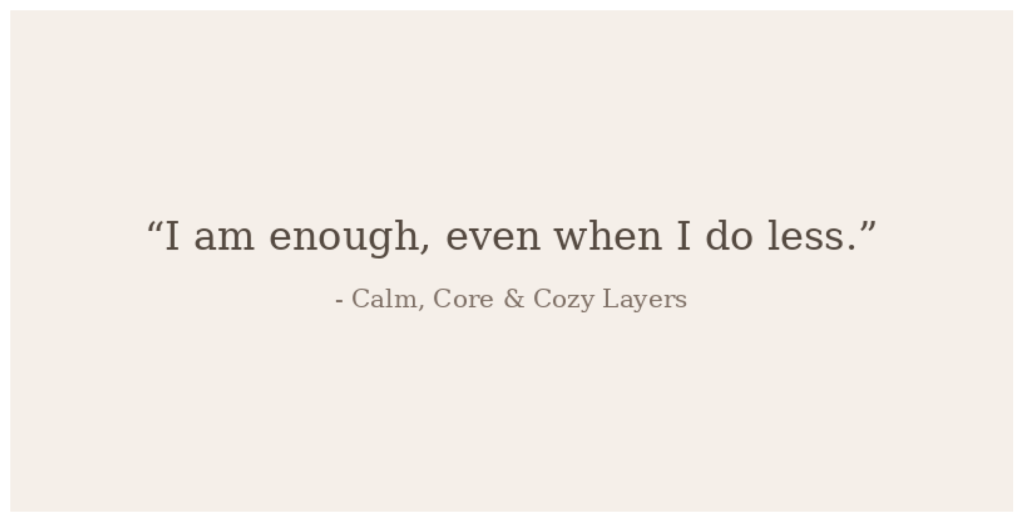
“I am enough, even when I do less.”
Thank You for Walking This Path With Me
If this piece brought you calm or clarity, share it with someone who might need a moment to exhale.
And as always, I’ll be here—tea in hand, blanket nearby, cozy layers ready. 💜
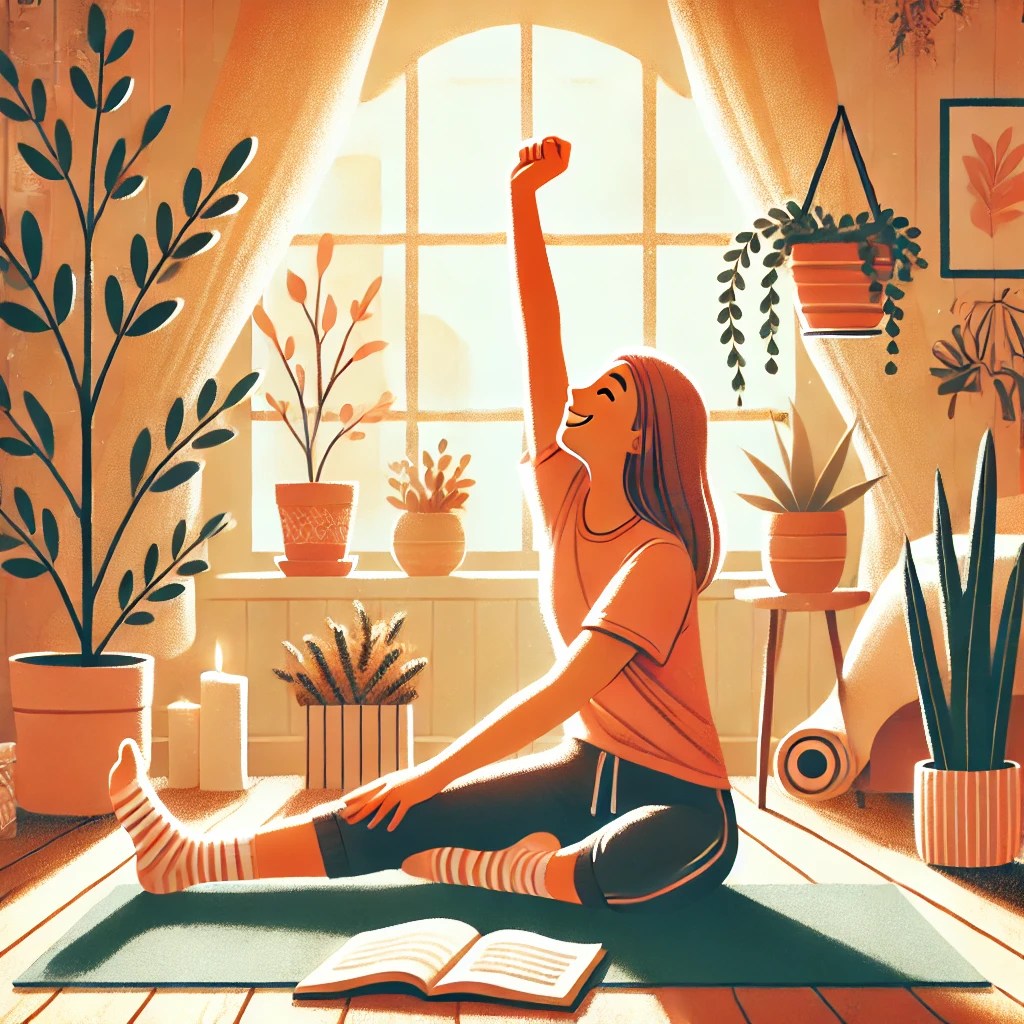
Image generated using AI to reflect the theme:Finding Strength in Everyday Triumphs
So, in my last post, I talked a bit about caregivers—you know, the people who are always there, quietly catching us when things fall apart. They’re the steady hands behind the scenes, and I’m still wrapping my head around just how much that kind of support means.
But here’s something else I’ve been thinking about lately: healing doesn’t always look how you expect. It’s not always some big, dramatic milestone. A lot of the time, it’s… smaller. Quieter.
Like—okay—yesterday I made it through the afternoon without that awful wave of fatigue crashing in. That might not sound like much, but for me, it felt huge. Or the other day, I laughed—like, really laughed—at something silly, and for a second I forgot about the weight I’ve been carrying.
It’s weird, how these tiny things can hit you. You realize you’re still here, still showing up for yourself, even when everything else feels like it’s out of your hands. Those little wins? They aren’t random. They come from somewhere deep.
Some part of me still knows how to fight. Gently, maybe. Quietly. But it’s still a fight. And it still counts.
Here’s the thing I keep coming back to—these little moments? They add up. Even the ones that seem pointless or kind of silly. They’re proof that I’m still in it. Still showing up. Still trying, in my own way.
Some days, the biggest win is drinking a full glass of water without forgetting. Or moving my body, just a little, even if it’s just a stretch on the couch. And sometimes, it’s just getting through the day without totally falling apart. That counts. I’ve decided that has to count.
And when I notice those small wins—really notice them—I feel like I get a bit of control back. Not over everything, but enough to keep going. That’s what matters.
It’s never been about doing it all perfectly. It’s just one weird, wobbly step at a time. Some steps are hard. Some feel ridiculous. But they’re all part of it.
The School Water Bottle and Thermos Tiffin Showdown
Now, speaking of small but mighty challenges, let’s talk about something that has become my daily strength test—one that requires strategy, patience, and sometimes, sheer brute force.
Let’s talk about real strength training, the kind I never signed up for but somehow face every single day in the form of my son’s school water bottle and thermos tiffin.
For reasons beyond my comprehension, my child has the arm strength of a world-class weightlifter when it comes to closing these things. Every morning, my son twists the lid of his water bottle with the intensity of a scientist sealing a top-secret formula. (And yes, he triple-checks it to make sure I didn’t “loosely” close it—because apparently, I’m the prime suspect in potential water-bottle disasters.) His grip strength? Unmatched. That bottle is sealed so tightly, I’m pretty sure it could survive the pressures of deep-sea exploration or even a journey to outer space. And yet, when he’s at school, he pops these lids open effortlessly, as if they’re made of butter. But when they come back home? That’s when my battle begins.
Now, I’m not totally helpless—I do have a bottle opener device. In theory, this should give me the upper hand. In reality? Some days, even that is no match for my son’s superhuman wrist strength. I place the bottle under the opener, adjust the grip, and twist. Sometimes it works instantly, and I feel like a genius. Other times, the device strains, my arms start shaking, and I begin to question whether I’m up against a regular water bottle or an industrial-grade vault.
Inevitably, there comes a moment when I give up on the device and resort to sheer willpower. I take a deep breath, brace the bottle between my knees for extra leverage, and summon every ounce of energy in my body. After five solid minutes of combat—attempts with a rubber grip, running the lid under hot water, and at least one dramatic sigh—I hear that tiny, victorious pop. The lid finally gives in!
I stand there, exhausted but triumphant, feeling like I had just conquered Mount Everest. My hands ache, my shoulders are sore, but victory is mine.
Then, as I’m catching my breath, my son strolls in, glances at me struggling with his bottle, and casually says, “Oh, I didn’t even close it that tight.”
…Sure, buddy. Sure.
The Never-Ending Quest for the Perfect Sleeping Position
Of course, water bottles aren’t my only daily challenge. If there’s one thing I’ve learned living with systemic sclerosis and GERD, it’s that finding a comfortable sleeping position is practically an extreme sport.
If you’ve ever played a game of musical chairs, you have a pretty good idea of what my nighttime routine looks like. Except in my case, I’m the only contestant, the music never stops, and instead of dancing around chairs, I’m shuffling between my reclining chair and my bed in an endless quest for comfort.
It all starts with The Chair—my trusty recliner, which has become my go-to for managing myself. Lying flat is basically an open invitation for my acid reflux to stage a rebellion, so I settle into my slightly upright throne, convincing myself,
“This is the night I’ll sleep here till morning.”
I wrap myself in a cozy blanket, find a decent position, and drift off feeling mildly victorious.
And then… midnight strikes.
Like clockwork, my body wakes up with a very specific complaint:
“Hey, this is NOT a bed.”
My hips start feeling stiff, my back protests, and suddenly, the chair that felt like a warm embrace at bedtime now feels like I’m trying to nap in an airport terminal.
At this point, I know it’s time for the migration.
I groggily peel myself out of the chair and shuffle toward the bedroom like a sleep-deprived zombie. I arrange pillows like an interior designer with a very specific aesthetic—one under my knees, one between my arms, another to keep me from rolling too flat. By the time I’m done, my bed looks less like a place for sleeping and more like a carefully structured pillow fortress.
And just when I think I’ve finally nailed it—my body perfectly angled, my reflux under control, my joints not screaming—I realize…
I forgot my water.
Now, I have two choices:
Ignore it and risk waking up parched, regretting every decision I’ve ever made.
Get up, grab the water, and start the entire pillow-adjusting process from scratch.
Spoiler: I always end up picking Option 2. Then I spend the next five minutes wrestling with pillows like I’m building some makeshift sleep fortress—half engineer, half very tired person just trying to survive the night.
And the wild part? Somehow, even with all the shifting and flopping around, I still manage a decent 6–7 hours. It’s not glamorous. It’s definitely not Instagram-worthy. But hey, it gets the job done.
When you’re dealing with GERD and systemic sclerosis, getting that kind of sleep feels like winning a prize. Like, genuinely. Sure, it might involve strange contortions, middle-of-the-night reconfigurations, and the occasional dramatic sigh—but when it works, it works.
And honestly, I’ve come to appreciate those weird little wins. The water bottle I finally managed to open without asking for help. The cup of coffee I didn’t spill. The heating pad I actually found on the first try. These moments don’t look like much from the outside, but they matter. A lot.
Because resilience? It’s not always loud or shiny. Sometimes it’s just quietly outsmarting your own body and saying, “Okay, I’ve got this. At least for today.”
So here’s to the odd victories, the late-night pillow acrobatics, and the hope that maybe—just once—I’ll get everything set up right the first time and drift off without a single readjustment. Fingers crossed, but no promises.