Once upon a slightly stiff morning, I decided I was done waking up like a folded-up ironing board. Something had to change. So naturally, I did what any modern wellness-seeker does: I bought a fancy yoga mat.
Then the rest followed—elastic bands, a foam roller, stretching straps, and a questionable online purchase labeled “deep tissue massage ball.” Retail therapy disguised as self-care. And honestly? It worked.
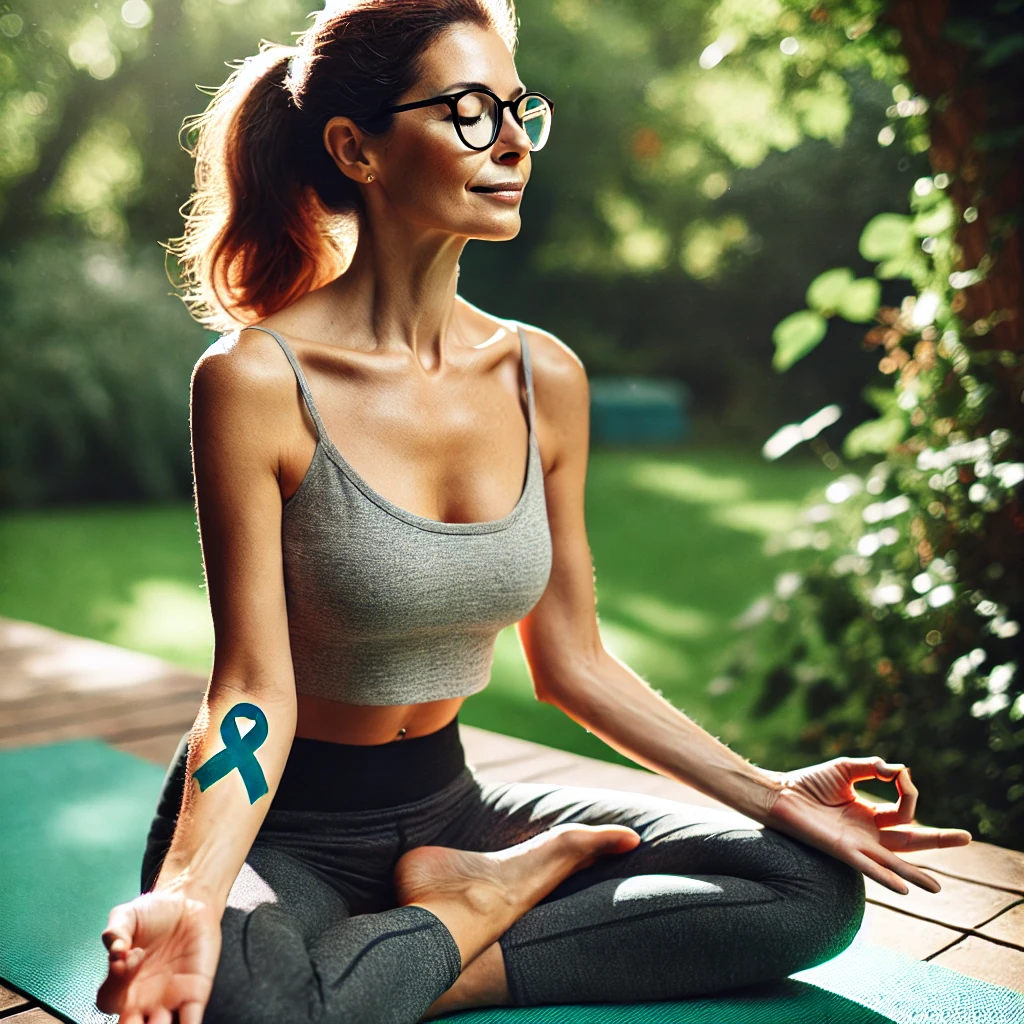
AI GENERATED: ROOTED IN BREATH, RISING IN STRENGTH.
But here’s the plot twist: what started as a way to motivate myself turned into something I genuinely look forward to. My mornings slowly shifted from chaotic sprints—frantically searching for something, anything, usually my phone—to something softer.
“A slow, stretchy, breathy hour of peace.“
No buzzing. No emails. No pressure to morph into a productivity robot by 8 a.m.
I also joined Bothra’s yoga classes, which—thankfully—didn’t require turning into human origami or humming “Om.” His flows were kind and doable. Like yoga with a good friend who also knows your knees crack on the third bend.
☀️ My Morning Flow (Stretch, Breathe, Glow)
Hand exercises – Rolling out the red carpet for your digits.
Gentle stretches – Because your spine deserves a vacation, even if it’s just a floor-based staycation.
Elastic band work – Light resistance, big satisfaction.
Breathwork – Inhale the focus. Exhale the random urge to check your phone like it holds the meaning of life
Pressure point massage – Unlock your body’s natural healing.
Lymphatic facial drainage – A tribute to your body’s inner river.
It takes about an hour, but honestly, it feels like a spa day you can do in pajamas. I no longer “squeeze it in.” I protect that time like it’s my phone charger on 1% battery.
A Soft Reminder, From My Mat to Yours:
You don’t need a candle or a mountain retreat to feel centered.
Sometimes, all it takes is one deep breath, a stretchy band, and the decision to start your day with you.
Want to call it yoga? Great.
Don’t want to? Also great.
Just call it yours.
A few deep breaths and a gentle reminder: You’re doing the best you can, and that’s enough. ☁️💛
Just for you. No permission needed.
– Nitya
💬 What simple thing can you offer yourself, just for you?
I was at this imaginary airport — don’t ask how I got there, I’m just as confused — standing in line with a suitcase that looked like it had been dragged through a decade of overthinking and people-pleasing. The zipper was gasping. I’m honestly surprised it didn’t pop open and hit someone in the face with a memory from that one zoom call where you were definitely not on mute.
The airline agent, a woman named Joy (because of course she was), took one look at it and said,
“Oh honey. You’re about to get charged an emotional baggage fee.”
She wasn’t wrong.
She even read the tag out loud:
“Contents: Old fears, outdated guilt, and the crushing weight of trying to please everyone always.”
Apparently, I’d been hauling it for years. Never even noticed. I’d just gotten good at carrying it. (10/10 posture, zero peace.)
Then Joy told me they’d updated their policy — you could now “leave stuff behind”. There was even a bright blue bin labeled:
“Unhelpful Thoughts & Feelings: Let Go Here.”
I laughed nervously. “Cool, cool. But like… what if I need the ‘What Will People Think’ folder? It’s color-coded and everything.”
Before I could keep talking myself out of it, this older woman rolled by with the calmest energy I’ve ever seen and a tiny backpack labeled “Things I Actually Like.” She gave me a knowing look and said,
“Travel lighter. Feels better.”
So I started unpacking.
Out went the awkward memory from high school.
Tossed the jar of guilt I’d kept since forever.
Even let go of the laminated “What-ifs” flashcards I’d reviewed every night like bedtime stories.
The bag zipped up effortlessly. Light as a marshmallow. (Okay maybe not that light, but you get the idea.)
Joy slapped on a sticker that read “Now Boarding: Peace & Snacks” and waved me through.
And I kid you not — as I walked away, I swear my suitcase whispered, “Finally.”
As I boarded, I noticed I wasn’t the only one.
Someone had tossed out an old to-do list.
Someone else left behind a grudge so big it filed for taxes separately.
I found a window seat, leaned back, and thought:
“Maybe healing doesn’t have to be dramatic. Maybe it’s just getting tired of paying extra for stuff you don’t even want to carry.”
The seatbelt sign came on.
I fastened mine around my joy and carried on — minus the baggage.
Before I continue with the next wave of posts, I had to pause.
This is a long-pending feeling of gratitude—something I’ve carried quietly in my heart. I knew I needed to halt, take a deep breath, and pay this tribute to everyone who has been part of my healing, near and far.
In the quiet moments of this journey, I often find myself held together by something much deeper than routines or treatments—it’s love. Not just the love that’s around me here in the U.S., but the love that stretches across time zones and phone lines, finding its way to me from far away.
📸 This image was enhanced using AI tools, but the emotion is 100% real
This post is especially for my Family in India, who’ve become my virtual caregivers in the truest sense.
My dad, with his quiet strength and steady faith, is always looking for ways to ease my path—even from afar. His daily prayers and calm determination feel like a shield I carry with me wherever I go.
My mom, the emotional heartbeat of our family, never misses her 4 a.m. Brahmakumari sakas. माँ की दुआएँ दूरी नहीं देखतीं। Her love is quiet but powerful—full of intuition, urgency, and a warmth that reaches me no matter where I am.
And then there are my siblings—each so different, yet both so constant, even from thousands of miles apart. They show up like a quiet force across time zones and screens—sometimes with a joke to lift the weight, sometimes just with a message that says, I’m here. No matter the distance, their love wraps around me like a soft, steady shield.
I’m also endlessly grateful for the wider circle of people who lift me up—in-laws, friends, chosen family, and distant well-wishers. Some check in with a quiet text, others hold space in prayer, and a few just show up with gentle presence and perfect timing. Each of them, in their own way, reminds me that I’m held by more love than I sometimes realize.
They all remind me—I am not alone.
I dream of the day I can hug them again and thank them not just with words, but with the presence they’ve been gifting me all along.
Until then, they remain the calm to my chaos, the core of my strength, and the coziest layer wrapped around my healing.
Do you have someone who supports you from afar? A voice, a prayer, or a message that lifts you up on tough days?
Feel free to share in the comments—or just send them a silent thank-you. Sometimes, that’s all it takes.
💌 Coming up next:
Small rituals that bring me comfort on low-energy days—tiny practices that make a big difference.
Until then, take it slow. Breathe. Be kind to yourself!
THIS VISUAL WAS GENTLY CRAFTED WITH AI TO MIRROR THE STILLNESS AND STRENGTH IN THESE WORDS
A year ago, I found myself standing in the kitchen, staring at a list that felt like a brick wall. Tasks, errands, messages, updates… even rest had become something I needed to schedule. I chuckled at the irony—my to-do list had its own zip code.
That’s when it hit me:
I didn’t need to do more. I needed to do less.
Not in a rebellious, drop-everything-and-move-to-the-mountains kind of way (though tempting), but in a cozy, grounded, soul-honoring way. I decided to try a gentle lifestyle shift—one that prioritized presence over pressure.
Here’s what I discovered—and what you might love too.
The Myth of More
For the longest time, I believed that unless I was running on empty, I wasn’t doing enough. “Busy” became my badge of honor, productivity my measure of worth.
But one rushed morning, already behind schedule and sitting in traffic before 9 a.m., I realized: this is not it.
What if more isn’t always the goal?
What if peace lives in the quiet margins?
Doing less gave me back what I didn’t even know I was missing: the space to actually enjoy my life, not just manage it.
Doing Less ≠ Being Less
Letting go of the hustle doesn’t mean you’ve stopped caring—it means you’re caring better. More intentionally. More gently.
One weekend, I skipped a Zoom gathering I felt obligated to attend. I was tired, and my daughter had just brewed a pot of calming herbal tea. We sat together, chatting about leaves, colors, how matcha always feels like a hug from the inside out, and how regular tea just doesn’t have the zen drama we need. That quiet moment—unplanned and unhurried—became the highlight of my month.
Doing less made room for more of what truly matters.
The Cozy Layer: Curating Your Daily Life
These days, I treat each morning like I’m designing a cozy room—soft light, warm textures, and only what brings me peace.
Instead of overloading my schedule, I now choose just three core tasks a day. That’s it. Anything extra is simply grace.
I’ve also woven in tiny rituals:
A deep breath before writing
A 3-minute stretch while waiting for the kettle
A post-lunch stroll with my phone left behind
These aren’t tasks. They’re cozy layers—comfort woven gently into the structure of my day.
Boundaries as Blankets
For the longest time, saying “no” felt harsh—like a door slamming shut. But now, I see boundaries as soft blankets—protective, warm, necessary.
A dear friend once asked if I could help organize a community event—during a week when I was already running on low. My heart wanted to say yes, but my body quietly said no. And this time, I listened.
I told her, “I’d love to support it from the sidelines, but I can’t commit right now.”
She understood. I stayed home, made soup, wrote in my journal. I felt whole.
Boundaries help us keep giving—but in a way that honors our own energy first.
Mindful Moments That Stretch Time
Time expands when you slow down.
One rainy afternoon, I found myself peeling an orange by the window. The scent, the sound of raindrops, the feel of the peel in my hand—it felt like a sacred pause. Just me and the moment.
Doing less allows these stretchy spaces to appear—little pockets of presence that turn the ordinary into something magical.
Try this:
Eat without distraction
Watch the steam rise from your tea
Sit in silence before your day begins
These tiny shifts will make your day feel longer, softer, and more yours.
Reclaiming Rest as a Sacred Act
Rest isn’t something we earn. It’s something we need.
For years, my version of rest meant scrolling on my phone, feeling guilty about everything I hadn’t done. It wasn’t until I started leaning into true stillness—guilt-free—that I felt the restoration begin.
Sometimes that looks like lying on the floor with a warm compress over my eyes. Other days, it’s stepping outside, greeting the sun for five uninterrupted minutes.
Rest is where the exhale lives.
It’s where our healing quietly waits.
A Cozy Challenge for You
Doing less doesn’t mean disappearing. It means showing up more fully—for yourself.
When I embraced this slower rhythm, I began to hear my own voice again. I became more present with my family, gentler with myself, and clearer about what I truly wanted.
So if you’re feeling overwhelmed, here’s your cozy challenge:
Let go of one thing this week. Just one.
And see what opens up in its place.
Then say this with me:
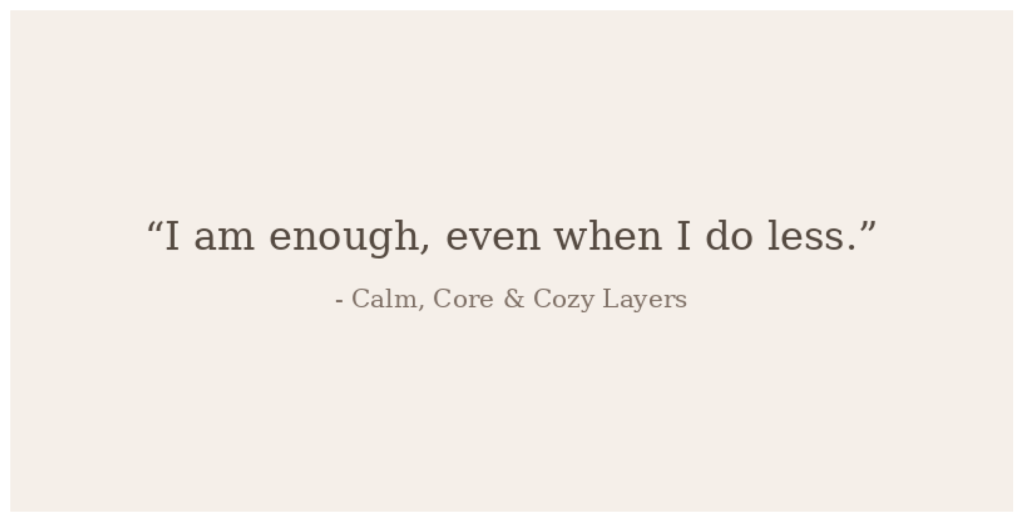
“I am enough, even when I do less.”
Thank You for Walking This Path With Me
If this piece brought you calm or clarity, share it with someone who might need a moment to exhale.
And as always, I’ll be here—tea in hand, blanket nearby, cozy layers ready. 💜
What if your daily pause didn’t come from a notification, but from a warm mug gently cupped in your palms?
Some people meditate. I make tea. Same thing, really—just with steam, a spoon, and slightly more biscuit crumbs involved.
This image was gently brewed with a little help from AI—just like a good cup of tea, made with care.
There’s something magical about tea. It doesn’t demand attention like coffee. It whispers. It says, “Come sit with me. Let’s not rush.”
Whether it’s the soft bubble of the kettle or the little float-dip-float dance of the tea bag, I find it oddly comforting. Making tea has become my pause button—though, to be honest, my husband is the real tea expert in our home. He somehow knows just the right balance of warmth and comfort in every cup. Still, the ritual remains the same for me: a gentle signal to stop scrolling, stop doing—just be. I usually reach for a mug—the big, slightly chipped one that fits both my hands like a hug—and settle into the moment.
It wasn’t always this way. I used to be fast and furious—rushing through days like a machine. But within a year, life shifted. It was a quiet year that slowly changed my rhythm, pulled me off autopilot, and brought me into awareness. It taught me how to breathe, to soften, and to slow down my pace.
In that shift, I discovered something unexpectedly beautiful: I became like the tea I brew every morning—gentle, warm, and relaxed. Tea doesn’t just steep in water; it steeps us in stillness. It taught me how to slow down without feeling like I’m falling behind.
I have a small, cozy tea corner at home, and a lovely little collection of teacups and pots that bring me joy. It’s where my husband and I often sit together, gently holding our mugs and stealing a few quiet sips before the day fully begins.
I like my tea slightly milky—not too strong, just mellow and soft, like a gentle nudge into the day. My husband, on the other hand, prefers his bold and brisk. And somehow, our teas match our temperaments, yet meet in the middle—like we always do.
Cinnamon for calm and warmth. Ginger for when I need a spark. Masala chai for the illusion of having it all together. Each cup is a small act of self-care. A little note to myself that says: “Hey. You’re doing okay. Here’s some comfort.”
Sometimes, with soft music in the background, we sip slowly and talk about how we’ve spent the last 23 years together—day by day, cup by cup, finding joy in the little things. Marriage brewed gently over time, like the perfect pot of tea.
And this post? It’s a special request from someone special to me. She’ll know it when she reads it. I hope she smiles and fills in the blanks, knowing every steeped word is a quiet dedication—to her.
She joked, “Are we writing about the millennial definition of tea or Gen Z’s?”—and I laughed from somewhere deep within. Let’s just say… we’re keeping it herbal, not verbal. ☕💛
What’s in your cup today? ☕💛Maybe it’s not just tea—but a moment of peace, a memory, or a little bit of hope!
“Where there’s tea, there’s hope.”– Arthur Wing Pinero
Living in Michigan means learning that the weather has a personality disorder. One minute, it’s warm and sunny, and I think, Finally, spring! —only for the wind to turn on me like an ex who suddenly remembers I owe them money. And just when I start dressing for warmth, summer crashes in like, Surprise! Hope you like sweating!
But here’s the thing: Just because I need practical, comfortable clothing doesn’t mean I have to look like I’m prepping for an arctic expedition (unless that’s the vibe I’m going for). Today’s fashion works in our favor—think oversized layers, comfy streetwear, and stylish yet functional pieces. So, while the weather plays its chaotic little games, I make sure my wardrobe stays one step ahead.
IMAGE GENERATED USING AI TO REFLECT THE THEME: FASHION MEETS FUNCTION.
How I Outsmart the Weather (and Still Look Good)
Layers Are My Superpower
Michigan weather has commitment issues, so layering is survival. A soft thermal base layer (because cold surprises are rude), an oversized sweater or hoodie, and a lightweight puffer or trench coat keep me prepared for any mood swing the sky throws at me. Bonus: Baggy layers are trendy now, so I can stay cozy and look effortlessly cool at the same time.
Gloves, but Make Them Chic
The wind? Disrespectful. My solution? Lined leather gloves that look sleek, fingerless knit gloves over touchscreen gloves, and on extra rude days, heated gloves—because suffering is not fashionable.
Footwear That’s Both Stylish and Functional
I’ve officially retired any shoes that look cute but make my feet beg for mercy. Thankfully, comfort is finally cool—chunky sneakers, combat boots, and platform soles are all on-trend, which means I don’t have to choose between walking pain-free and looking put together. In winter, I swear by insulated boots with faux fur lining—warm, weatherproof, and no toe sacrifices required. When it’s warmer out, cushioned sneakers are my go-to. They pair effortlessly with joggers, jeans, or honestly, anything I can throw on in five minutes.
Fabrics That Don’t Betray Me
Life’s too short for scratchy sweaters and stiff pants. I’m sticking to breathable, soft fabrics that work with my body, not against it. Think cotton, bamboo blends, and moisture-wicking materials that don’t trap heat or itch like crazy. My current rotation? Oversized knits, fleece-lined leggings, and relaxed-fit joggers. Best part? Comfy fashion is trending—so I can look like I made an effort, even when I really just wanted to stay in pajamas.
Functional Accessories = Secret Weapons
The best part of fashion? Accessories that double as survival gear.
Oversized scarves = warmth AND a personal blanket.
Big sunglasses = block wind AND serve mysterious celebrity vibes.
Compression socks = help with circulation AND come in fun patterns now (finally).
Style is What You Make It
At the end of the day, fashion should work for you, not the other way around. We’re lucky that modern trends—like oversized layers, functional footwear, and effortless streetwear—actually support a wardrobe that’s both stylish and practical.
So, whether it’s layering like a pro, investing in cute but functional gloves, or rocking sneakers that respect your feet, fashion should make you feel good, confident, and prepared for whatever nonsense the weather throws at you.
Now tell me—what’s your go-to outfit when the weather can’t make up its mind? 😆
The other day, I woke up to sunshine streaming through my window. Finally, I thought, a sign that spring is coming! I stepped outside in a light jacket, ready to embrace the fresh air—only to be met with icy wind that cut straight through me. By noon, the sun was shining again like nothing had happened. Welcome to Michigan weather, where winter and spring battle it out like two kids fighting over the front seat.
It’s been a year of learning to live in tune with my body—one season at a time. I’ve noticed the way the chill of winter lingers in my joints, or how summer’s heat can feel like both a relief and a challenge. I’m no expert, but I’ve become a keen observer. One thing’s certain: my body and the weather have a complicated relationship. Some days, they dance. Other days, they fight.
Image generated using AI to reflect the theme:How the Seasons Play Games with My Body
Winter: The Season of Betrayal
Here’s something magical about winter—as long as I’m watching it from inside, wrapped in a blanket with a warm cup of tea. The moment I step outside, though? Instant regret. My hands go numb before I can find my keys, and my joints start complaining like they’re unionizing.
Raynaud’s kicks in out of nowhere – One moment my hands are fine, and the next, they look like they’ve been swapped with a snowman’s. Not exactly functional.
Dry air does a number on my skin – No matter how much lotion I use, winter air seems determined to turn my skin into cracked parchment.
Energy drain and stiff joints – Getting out of bed feels like wading through molasses. And somehow, I’m already exhausted by mid-morning.
What Keeps Me Sane:
✔ Microwavable gloves – Thirty seconds in the microwave and my fingers are back from the dead. Instant relief, minimal effort.
✔ Lotion everywhere – I’ve got a tube in every corner of my life—car, purse, nightstand, even the kitchen. Dry hands don’t stand a chance.
✔ Smart layering – Forget bulky sweaters. Thin thermal layers are the real MVPs—cozy without making me look like I’m wearing half my closet.
Spring: The Sneaky Season
Spring acts like it’s here to save the day, but let’s be real—it’s a hot (or cold) mess. One minute, it’s 60 degrees and sunny. The next? A random snowstorm. And the worst part? The wind.
How Spring Plays Games with Me:
Barometric pressure shifts = instant “off” feeling – Headaches, joint pain, fatigue. I can feel the weather changing before it even happens.
High winds make everything worse – I don’t know why, but wind saps my energy and makes my body tense up.
Allergies join the party – Just when I think I’m safe, pollen rolls in and reminds me I am, in fact, not.
How I Fight Back:
✔ Checking the barometer like it’s my job – If I know a pressure drop is coming, I mentally prepare for a rough day.
✔ Hand warmers, even in spring – Because Michigan spring is unpredictable and my hands don’t trust it.
✔ Allergy meds = always stocked – Pollen is sneaky, but I’m sneakier.
Did I Forget Summer? Of Course I Did—It Barely Exists
Man, it’s Michigan—summer leaves before it even arrives. We get maybe two good weeks before the humidity kicks in, the mosquitoes take over, and the air feels like a sweaty blanket. Then, just as I start adjusting? Boom! Fall shows up, uninvited.
How Summer Tries (and Fails) to Stick Around:
It’s either 90 degrees or 60—there’s no in-between.
Humidity makes me feel like I’m walking through soup.
Swelling = fingers and feet feel like they belong to someone else.
How I Pretend to Enjoy It:
✔ Strapable water bottle = non-negotiable – If I’m going to sweat, I better be hydrated.
✔ Cooling towels & misting sprays – Michigan might ditch summer early, but while it’s here, it’s hot.
✔ Loose, breathable clothes – Because tight waistbands in the heat? No thanks.
Final Thoughts: Seasons, You Win This Round
Okay, Mother Nature—I get it. You’ve got jokes. One minute I’m basking in sunshine, the next I’m buried under ten layers of thermals, wondering why my knees sound like popcorn. It’s been a ride.
But after enough seasonal whiplash, I’ve picked up a few survival hacks that make the chaos slightly more bearable. (Shoutout to my microwave gloves. MVP.)
Now I’m curious—what’s your secret weapon for surviving seasonal shenanigans? Spill the tea. Or better yet, grab a cup and let’s compare notes.
Image generated using AI to reflect the theme:Finding Strength in Everyday Triumphs
So, in my last post, I talked a bit about caregivers—you know, the people who are always there, quietly catching us when things fall apart. They’re the steady hands behind the scenes, and I’m still wrapping my head around just how much that kind of support means.
But here’s something else I’ve been thinking about lately: healing doesn’t always look how you expect. It’s not always some big, dramatic milestone. A lot of the time, it’s… smaller. Quieter.
Like—okay—yesterday I made it through the afternoon without that awful wave of fatigue crashing in. That might not sound like much, but for me, it felt huge. Or the other day, I laughed—like, really laughed—at something silly, and for a second I forgot about the weight I’ve been carrying.
It’s weird, how these tiny things can hit you. You realize you’re still here, still showing up for yourself, even when everything else feels like it’s out of your hands. Those little wins? They aren’t random. They come from somewhere deep.
Some part of me still knows how to fight. Gently, maybe. Quietly. But it’s still a fight. And it still counts.
Here’s the thing I keep coming back to—these little moments? They add up. Even the ones that seem pointless or kind of silly. They’re proof that I’m still in it. Still showing up. Still trying, in my own way.
Some days, the biggest win is drinking a full glass of water without forgetting. Or moving my body, just a little, even if it’s just a stretch on the couch. And sometimes, it’s just getting through the day without totally falling apart. That counts. I’ve decided that has to count.
And when I notice those small wins—really notice them—I feel like I get a bit of control back. Not over everything, but enough to keep going. That’s what matters.
It’s never been about doing it all perfectly. It’s just one weird, wobbly step at a time. Some steps are hard. Some feel ridiculous. But they’re all part of it.
The School Water Bottle and Thermos Tiffin Showdown
Now, speaking of small but mighty challenges, let’s talk about something that has become my daily strength test—one that requires strategy, patience, and sometimes, sheer brute force.
Let’s talk about real strength training, the kind I never signed up for but somehow face every single day in the form of my son’s school water bottle and thermos tiffin.
For reasons beyond my comprehension, my child has the arm strength of a world-class weightlifter when it comes to closing these things. Every morning, my son twists the lid of his water bottle with the intensity of a scientist sealing a top-secret formula. (And yes, he triple-checks it to make sure I didn’t “loosely” close it—because apparently, I’m the prime suspect in potential water-bottle disasters.) His grip strength? Unmatched. That bottle is sealed so tightly, I’m pretty sure it could survive the pressures of deep-sea exploration or even a journey to outer space. And yet, when he’s at school, he pops these lids open effortlessly, as if they’re made of butter. But when they come back home? That’s when my battle begins.
Now, I’m not totally helpless—I do have a bottle opener device. In theory, this should give me the upper hand. In reality? Some days, even that is no match for my son’s superhuman wrist strength. I place the bottle under the opener, adjust the grip, and twist. Sometimes it works instantly, and I feel like a genius. Other times, the device strains, my arms start shaking, and I begin to question whether I’m up against a regular water bottle or an industrial-grade vault.
Inevitably, there comes a moment when I give up on the device and resort to sheer willpower. I take a deep breath, brace the bottle between my knees for extra leverage, and summon every ounce of energy in my body. After five solid minutes of combat—attempts with a rubber grip, running the lid under hot water, and at least one dramatic sigh—I hear that tiny, victorious pop. The lid finally gives in!
I stand there, exhausted but triumphant, feeling like I had just conquered Mount Everest. My hands ache, my shoulders are sore, but victory is mine.
Then, as I’m catching my breath, my son strolls in, glances at me struggling with his bottle, and casually says, “Oh, I didn’t even close it that tight.”
…Sure, buddy. Sure.
The Never-Ending Quest for the Perfect Sleeping Position
Of course, water bottles aren’t my only daily challenge. If there’s one thing I’ve learned living with systemic sclerosis and GERD, it’s that finding a comfortable sleeping position is practically an extreme sport.
If you’ve ever played a game of musical chairs, you have a pretty good idea of what my nighttime routine looks like. Except in my case, I’m the only contestant, the music never stops, and instead of dancing around chairs, I’m shuffling between my reclining chair and my bed in an endless quest for comfort.
It all starts with The Chair—my trusty recliner, which has become my go-to for managing myself. Lying flat is basically an open invitation for my acid reflux to stage a rebellion, so I settle into my slightly upright throne, convincing myself,
“This is the night I’ll sleep here till morning.”
I wrap myself in a cozy blanket, find a decent position, and drift off feeling mildly victorious.
And then… midnight strikes.
Like clockwork, my body wakes up with a very specific complaint:
“Hey, this is NOT a bed.”
My hips start feeling stiff, my back protests, and suddenly, the chair that felt like a warm embrace at bedtime now feels like I’m trying to nap in an airport terminal.
At this point, I know it’s time for the migration.
I groggily peel myself out of the chair and shuffle toward the bedroom like a sleep-deprived zombie. I arrange pillows like an interior designer with a very specific aesthetic—one under my knees, one between my arms, another to keep me from rolling too flat. By the time I’m done, my bed looks less like a place for sleeping and more like a carefully structured pillow fortress.
And just when I think I’ve finally nailed it—my body perfectly angled, my reflux under control, my joints not screaming—I realize…
I forgot my water.
Now, I have two choices:
Ignore it and risk waking up parched, regretting every decision I’ve ever made.
Get up, grab the water, and start the entire pillow-adjusting process from scratch.
Spoiler: I always end up picking Option 2. Then I spend the next five minutes wrestling with pillows like I’m building some makeshift sleep fortress—half engineer, half very tired person just trying to survive the night.
And the wild part? Somehow, even with all the shifting and flopping around, I still manage a decent 6–7 hours. It’s not glamorous. It’s definitely not Instagram-worthy. But hey, it gets the job done.
When you’re dealing with GERD and systemic sclerosis, getting that kind of sleep feels like winning a prize. Like, genuinely. Sure, it might involve strange contortions, middle-of-the-night reconfigurations, and the occasional dramatic sigh—but when it works, it works.
And honestly, I’ve come to appreciate those weird little wins. The water bottle I finally managed to open without asking for help. The cup of coffee I didn’t spill. The heating pad I actually found on the first try. These moments don’t look like much from the outside, but they matter. A lot.
Because resilience? It’s not always loud or shiny. Sometimes it’s just quietly outsmarting your own body and saying, “Okay, I’ve got this. At least for today.”
So here’s to the odd victories, the late-night pillow acrobatics, and the hope that maybe—just once—I’ll get everything set up right the first time and drift off without a single readjustment. Fingers crossed, but no promises.
💜 A Story Close to My Heart 💜 “Some battles are visible. Others are fought quietly, behind closed doors.”
Over the past year, I’ve navigated life with systemic sclerosis, a rare autoimmune disease that affects not just the patient but also the people around them—especially caregivers.
I wrote this personal piece to share what it’s like to live with a condition that few talk about and to shine a light on the quiet strength of those who support us along the way.
This is the first in a series of personal narratives I’ll be sharing, and I’d love for you to read and tell me what you think.
AN AI-GENERATED IMAGE THAT ECHOES THE RESILIENCE, SUPPORT, AND QUIET STRENGTH
Living with a rare autoimmune disease isn’t just about the physical symptoms—it’s the emotional weight too, the kind that’s hard to explain to anyone who hasn’t been through it. You often feel like you’re walking this road alone. These conditions don’t get much attention, so the research is thin, and treatment options? Often unclear or just not available. For many, getting a diagnosis takes years, and even then, symptoms can be unpredictable—good days, bad days, and no real warning in between. You end up becoming your own advocate, whether you’re ready for it or not. But through all that, one thing really matters: the people who show up. Caregivers—family, close friends, sometimes a nurse who actually listens—they make the path less overwhelming. They help carry the load when the system doesn’t have answers.
I know this journey firsthand. I was diagnosed with limited systemic sclerosis about a year ago, but my symptoms began long before that. For five years, I experienced Raynaud’s phenomenon, a condition where my fingers and toes would turn white and blue in response to cold or stress. At first, it was just a dry mouth. Annoying, sure—but easy enough to brush off. I told myself it was nothing serious. But as time went on, it got worse, and eventually I couldn’t ignore it anymore. Then, in May of last year, everything changed. I was in New York at the time, and between the freezing weather and a few things I ate that didn’t sit well, my body just seemed to spiral. Out of nowhere, I started having intense stomach issues. By the time I got back home to Michigan, the pain had gotten so bad that I ended up in the ER. They told me it was GERD—acid reflux, basically—but that didn’t explain everything. Not long after, I started feeling this deep ache in my joints, and I knew something bigger was going on. A follow-up with my rheumatologist confirmed it: systemic sclerosis. The diagnosis caught me off guard. My world didn’t exactly fall apart, but everything shifted. That was the moment I realized I had to approach my health differently. I couldn’t control everything, but I could take ownership of what I could.
Today, as I write this, I am celebrating my 200th consecutive day of practicing yoga. Not that I am completely cured, but yoga and strength training have given me a way to rediscover myself and reclaim agency over my health. Most days, I rely on small routines that keep me grounded. One of them is doing breathing exercises—nothing fancy, just a few minutes here and there using an app I like. It helps calm my nerves and supports my lungs, especially on harder days. I also carve out time—usually an hour or two—for gentle yoga and specific hand stretches. They’ve become a part of how I manage stiffness and stay flexible, even when my body doesn’t always cooperate.
Food and sleep have become non-negotiables too. Lately, I’ve really started to see how much my eating and sleep habits shape how I feel. I didn’t always pay much attention, honestly. But these days, I’ve learned to check in with myself more often. If something feels off, I try tweaking little things—meals, rest, whatever helps. It’s not some perfect routine, but it’s something that grounds me.
Living with a chronic illness? It’s messy. There’s no tidy fix. The rough patches don’t disappear. But those small daily habits—little rituals, really—give me a bit of footing. A small way to feel like I’m doing something to help myself keep going.
If I’m being honest, what’s helped me the most hasn’t been a treatment plan or some structured routine. It’s been the people—my people. My family, my close friends—they’ve shown up in the kind of quiet, dependable ways that don’t make headlines but mean everything. Just being there, without needing to be asked.
And then there’s my husband. He’s walked through all of it with me. The easier days, the tough ones, and those moments when I’ve barely had the energy to speak. He never tries to fix what can’t be fixed. He’s just there. Present. Steady. The kind of calm that anchors you when everything else feels shaky.
That kind of love? It doesn’t come with instructions or expectations. It simply stays. And sometimes, that’s exactly what gets you through—just being held, quietly, until you’re ready to take the next step.
The Emotional Side of Systemic Sclerosis
When I first heard the words “systemic sclerosis,” everything changed. It wasn’t just a diagnosis—it felt like a line had been drawn between the life I knew and whatever came next. Suddenly, I had to rethink how I saw myself, how I moved through the world, and how I connected with my own body.
Those early days weren’t easy. Accepting that things were different now took time. I wasn’t ready for how quickly my day-to-day life would shift, or how much of my identity I’d have to rebuild in the process.Simple tasks weren’t always so simple anymore, and I had to rethink how I lived my daily life.
There were moments—honestly, stretches of time—when I felt frustrated and down. Sometimes I even tried to pretend things hadn’t changed. That feeling of losing control over my own body was scary, and at times, it hit me hard.
But over time, something began to change. I began to realize that, while this condition shaped a lot of my daily life, it didn’t have to become my whole identity. I wasn’t ready for what this illness would bring. It pushed me in ways I didn’t expect. But along the way, I began to uncover pieces of myself I hadn’t noticed before. I found a kind of strength—not loud or dramatic, but quiet, steady—the kind that shows up when things feel overwhelming.
Over time, I started tuning in more closely to what I needed, not just physically, but emotionally too. I began taking better care of myself, not out of fear, but out of respect for what my body was going through.
Adding Joy to the Journey
Something I didn’t expect to learn through all of this is just how much the small, joyful moments can carry you. I started keeping a little gratitude notebook—not anything fancy, just a place to jot down one good thing from each day. Some days, it’s something simple, like a bit of relief from discomfort. Other times, it’s a kind message from a friend or making progress in yoga when I didn’t think I could.
I’ve also leaned into things that help me feel more like myself—trying out new recipes in the kitchen, laughing with my family, or even just rewatching a favorite show. These aren’t huge events, but they help. They give me something to smile about on days when everything else feels hard. It’s been one way of finding happiness that isn’t tied to whether or not my symptoms are flaring up.
As I started paying more attention to these small joys, I also realized how important it was to be around people who really get what this kind of journey feels like. That’s what led me to a support group—not because I had all the answers, but because I needed a space where I didn’t have to explain everything. Just being understood without saying much at all—that’s been a kind of healing, too.
Finding Strength in Support Groups
A few months ago, I found myself walking into a support group meeting here in Michigan for people living with systemic sclerosis. I wasn’t sure what to expect, honestly. But looking back, it’s one of the best steps I’ve taken. The group meets once a month, and those meetings have become a kind of anchor for me.
There’s something really comforting about being surrounded by people who just understand. You don’t have to explain your pain or justify your exhaustion—they’ve lived it too. Just listening to others share their stories, how they’re getting through the hard parts, what’s worked for them—it’s been a huge relief.
Two mentors in the group—Sheri Harworth Hicks and Mary Alore—have stood out in the best way. They’ve been through this long enough to offer advice that actually lands. They’ve helped me sort through medical stuff, emotional stuff, even just day-to-day adjustments. They’re generous with their time and with their empathy, and I feel lucky to know them.
It’s not just me who’s benefited either. My husband has come to understand the condition in a whole new way, just by being around others in the same boat. He doesn’t feel quite so alone in it now. That’s made a real difference—not just for me, but for him as well. I see him stepping into the caregiver role with more confidence and less guesswork.
Being part of this community has changed how I see the bigger picture, too. So many of us have similar experiences—years of waiting for a diagnosis, limited access to specialists, uncertainty around treatments. The system isn’t always built for people with rare conditions, and you feel that. Which is why awareness, and even just talking about it, matters more than people realize.
The Caregiver’s Journey
Taking care of someone with a rare illness goes way beyond giving meds or driving to appointments. It seeps into every corner of life—meals, moods, money, even sleep. And the truth is, a lot of that work goes unnoticed. It’s unpaid. It’s exhausting. And it asks a lot—mentally, emotionally, physically—from the person doing it.
I see it every day in my own home. My husband’s been everything from my sounding board to my advocate, and even the person who remembers the little things when I can’t. He’s the one who holds it together when I’m falling apart. It’s not easy for him. I know that. He doesn’t always say much, but I can see the weight he carries.
And that’s exactly why caregiver support matters. They need help, too—whether it’s someone to talk to, a moment to themselves, or just knowing they’re not invisible in all this. Giving them space to breathe doesn’t just help them—it helps the person they’re caring for, too. When caregivers are supported, the whole household feels it. It’s a team effort, even when one person’s health is at the center.
Conclusion: A Call for Compassionate Change
Living with a rare autoimmune disease—or being the one who’s caring for someone going through it—is something you can’t really prepare for. It sort of hits you in waves. Some days, you feel strong. Other days, just getting through feels like the win. It’s draining, unpredictable, and yeah, it can be incredibly frustrating. Nothing about it is neat or easy. But underneath all of that, there’s this steady thread of love that keeps you going, even when everything else feels like too much.
Caregivers, especially, don’t get talked about enough. They’re the ones keeping everything going in the background—managing meds, juggling appointments, making sure we feel seen and safe when the rest of the world doesn’t always understand. And often, they do all this while quietly setting aside their own needs.
Honestly, the system doesn’t always support them—or us. But we find ways to cope. Sometimes it’s sharing a laugh, or finding a sliver of peace in a tough day. For me, connecting with a support group was a big step. Just knowing others get it made me feel a little less alone. And carving out a few moments of self-care—whatever that looks like—helps keep things from spiraling.
💬 I’d really like to hear from others walking this road. Whether you’re a caregiver, a patient, or just someone who cares about rare disease advocacy—how has this journey shaped you? What’s helped, and what do you still need? Let’s have an honest, supportive conversation in the comments.
Balancing Mind, Body, and Mood One Layer at a Time
Chapter 1 of the Empowered Healing Series
Calm, Core & Cozy Layers perfectly captures a balance of wellness, strength, and comfort. It gives off a warm, inviting, and empowering vibe, making it perfect for a healing and self-care space.
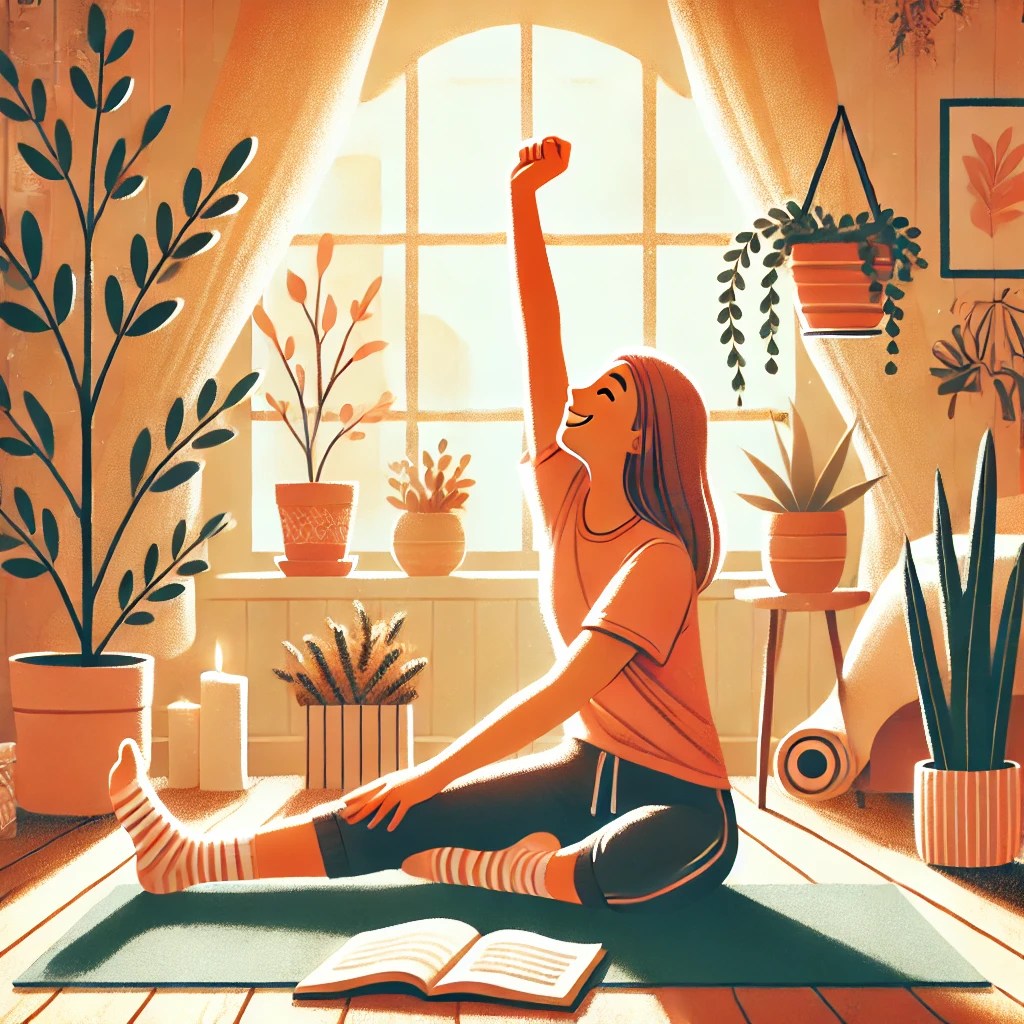
AI-GENERATED IMAGE CREATED TO COMPLEMENT THE CALM, CORE & COZY LAYERS THEME.
I am a Michigan resident who is discovering the art of balancing wellness, strength, and warmth—especially during our unpredictable seasons. This blog is my cozy corner of the internet where I share:
Mindfulness Practices: Techniques to cultivate inner calm amidst life’s chaos.
Core Strengthening: Tips and routines to build a strong foundation for overall health.
Cozy Living: Embracing comfort through fashion, home décor, and lifestyle choices that wrap you in warmth.
Join me on this journey as we blend tranquility, resilience, and snugness into our daily lives. Whether you’re seeking a moment of peace, a new workout routine, or ways to make your space feel like a warm hug, there’s something here for you.
Wellness looks different for everyone. For some, it’s movement and energy; for others, it’s stillness and rest. For me, wellness means resilience—adapting, listening to my body, and finding peace in the small victories. What does wellness mean to you? I’d love to hear your thoughts. Let’s keep this conversation going. 💛
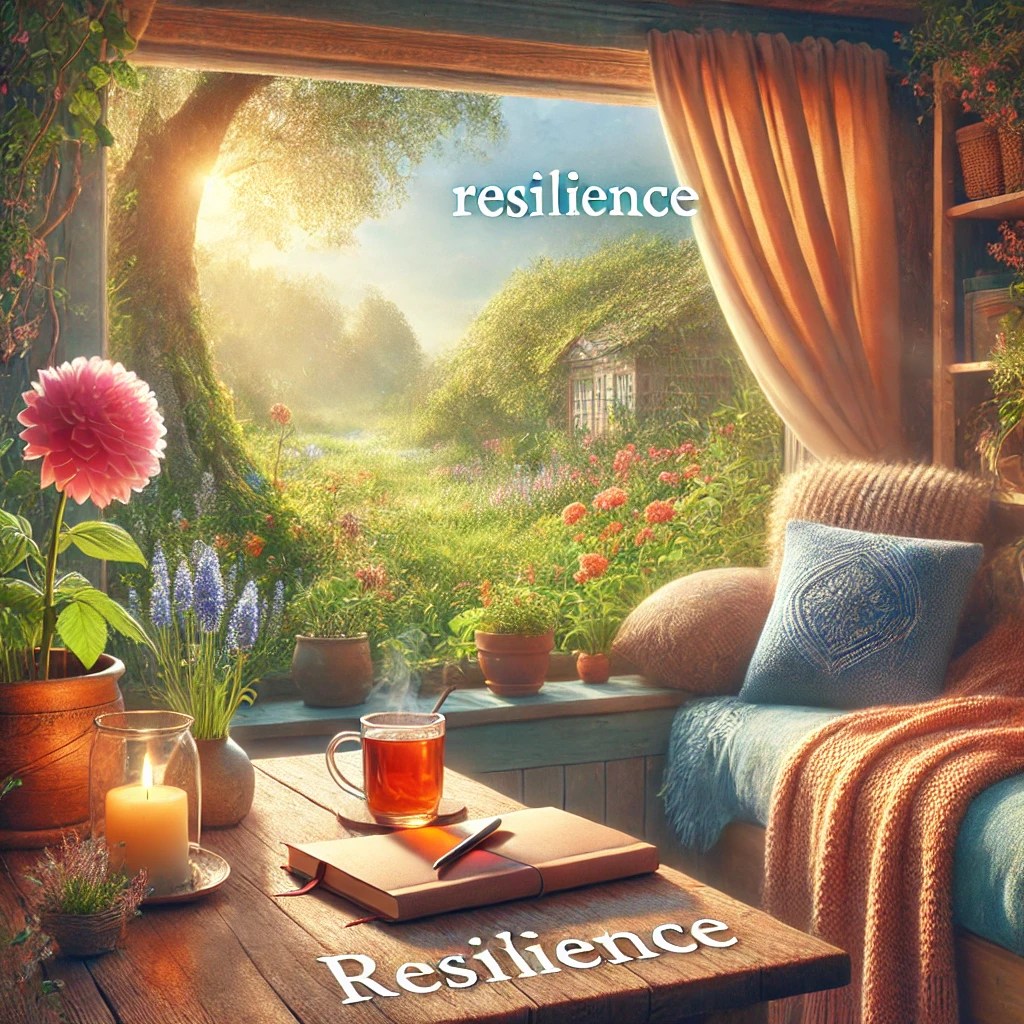
AI-GENERATED IMAGE: A TRIBUTE TO RESILIENCE.
“Resilience is accepting your new reality, even if it’s less good than the one you had before. You can fight it, you can do nothing but scream about what you’ve lost, or you can accept that and try to put together something that’s good.”- Elizabeth Edwards